SUBSCRIBE TO OUR FREE NEWSLETTER
Daily news & progressive opinion—funded by the people, not the corporations—delivered straight to your inbox.
5
#000000
#FFFFFF
To donate by check, phone, or other method, see our More Ways to Give page.
Daily news & progressive opinion—funded by the people, not the corporations—delivered straight to your inbox.
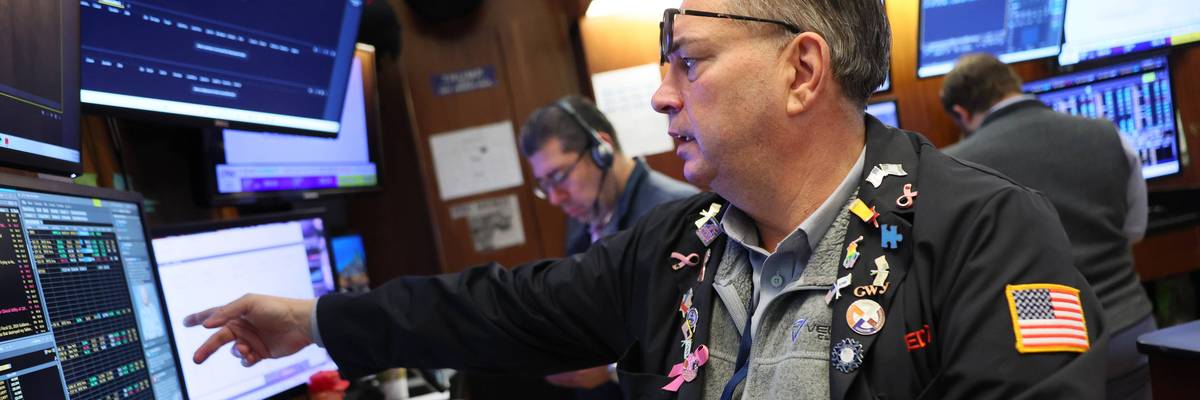
Traders work on the floor of the New York Stock Exchange during morning trading on March 18, 2026 in New York City.
"Who was it? Trump? A family member? A White House staffer?" asked US Sen. Chris Murphy.
Just minutes before US President Donald Trump momentarily boosted the stock market—and sent oil prices tumbling—with his disputed Monday announcement of peace talks with Iran, unknown traders loaded up on positions that allowed them to profit from the resulting movement in equities and commodities.
The Financial Times reported that "roughly 6,200 Brent and West Texas Intermediate futures contracts changed hands between 6:49 am and 6:50 am New York time on Monday, just a quarter of an hour ahead of the US president’s post on Truth Social that there had in recent days been 'productive conversations' with Tehran to end the war in Iran."
FT added that the notional value of those trades was $580 million.
"Trading volumes for Brent and WTI leapt at the same time, 27 seconds before 6:50 am," the newspaper reported. "Futures tracking the S&P 500 share index jumped in price moments after the oil trade, with volumes also rising significantly during that timeframe. It was not known whether one entity or several entities were behind Monday’s trades."
An unnamed trader at a "major hedge fund" told FT that "my gut from watching markets for the last 25 years is this is really abnormal."
"It’s Monday morning, there’s no important data today, there aren’t any Fed speakers you’d want to front-run. It’s an unusually large trade for a day with no event risk," the trader said. "Somebody just got a lot richer.”
A BBC review of market data similarly found that "traders bet hundreds of millions of dollars on oil contracts just minutes before" Trump's announcement of talks with Iran. Iranian officials publicly denied that they are negotiating with the Trump administration, and Iran's top lawmaker accused the US president of peddling "fake news" in an attempt to "manipulate the financial and oil markets."
The suspiciously timed bets ahead of the US president's post heightened concerns that Trump administration insiders are illegally trading on—and profiting massively from—nonpublic knowledge.
Responding to a report that $1.5 billion worth of S&P 500 futures was purchased just five minutes before Trump's Monday announcement, US Sen. Chris Murphy (D-Conn.) asked: "Who was it? Trump? A family member? A White House staffer?"
"This is corruption," the senator wrote. "Mind-blowing corruption."
Last week, Murphy joined US Rep. Greg Casar (D-Texas) in unveiling legislation that would ban prediction markets on "government actions, terrorism, war, assassination, and events where an individual knows or controls the outcome."
The bill came on the heels of suspiciously timed, highly profitable bets related to US military actions in Venezuela and Iran.
The Guardian reported Monday that several newly created accounts on the online prediction platform Polymarket "laid bets on a US-Iran ceasefire over the weekend that appeared to show signs of insider knowledge, according to experts."
Researcher Ben Yorke told the newspaper that the accounts—which are anonymous—"definitely" look like "someone with some degree of inside info."
The Guardian noted that "online crypto watchers and experts suggested that the bets bore the signs of insider trading—both because they bought their positions at market price, and because some of the accounts looked like they could belong to a single investor attempting to conceal their identity by splitting their bet between multiple wallets."
According to Yorke, "Typically, when you see wallet-splitting and deliberate attempts to obfuscate identity, it’s one of two scenarios: either a very large investor trying to shield their position from market impact, or insider trading."
The Trump White House insisted Monday that any suggestion of insider trading "is baseless and irresponsible reporting."
“The White House does not tolerate any administration official illegally profiteering off of insider knowledge," said White House spokesperson Kush Desai.
Dear Common Dreams reader, It’s been nearly 30 years since I co-founded Common Dreams with my late wife, Lina Newhouser. We had the radical notion that journalism should serve the public good, not corporate profits. It was clear to us from the outset what it would take to build such a project. No paid advertisements. No corporate sponsors. No millionaire publisher telling us what to think or do. Many people said we wouldn't last a year, but we proved those doubters wrong. Together with a tremendous team of journalists and dedicated staff, we built an independent media outlet free from the constraints of profits and corporate control. Our mission has always been simple: To inform. To inspire. To ignite change for the common good. Building Common Dreams was not easy. Our survival was never guaranteed. When you take on the most powerful forces—Wall Street greed, fossil fuel industry destruction, Big Tech lobbyists, and uber-rich oligarchs who have spent billions upon billions rigging the economy and democracy in their favor—the only bulwark you have is supporters who believe in your work. But here’s the urgent message from me today. It's never been this bad out there. And it's never been this hard to keep us going. At the very moment Common Dreams is most needed, the threats we face are intensifying. We need your support now more than ever. We don't accept corporate advertising and never will. We don't have a paywall because we don't think people should be blocked from critical news based on their ability to pay. Everything we do is funded by the donations of readers like you. When everyone does the little they can afford, we are strong. But if that support retreats or dries up, so do we. Will you donate now to make sure Common Dreams not only survives but thrives? —Craig Brown, Co-founder |
Just minutes before US President Donald Trump momentarily boosted the stock market—and sent oil prices tumbling—with his disputed Monday announcement of peace talks with Iran, unknown traders loaded up on positions that allowed them to profit from the resulting movement in equities and commodities.
The Financial Times reported that "roughly 6,200 Brent and West Texas Intermediate futures contracts changed hands between 6:49 am and 6:50 am New York time on Monday, just a quarter of an hour ahead of the US president’s post on Truth Social that there had in recent days been 'productive conversations' with Tehran to end the war in Iran."
FT added that the notional value of those trades was $580 million.
"Trading volumes for Brent and WTI leapt at the same time, 27 seconds before 6:50 am," the newspaper reported. "Futures tracking the S&P 500 share index jumped in price moments after the oil trade, with volumes also rising significantly during that timeframe. It was not known whether one entity or several entities were behind Monday’s trades."
An unnamed trader at a "major hedge fund" told FT that "my gut from watching markets for the last 25 years is this is really abnormal."
"It’s Monday morning, there’s no important data today, there aren’t any Fed speakers you’d want to front-run. It’s an unusually large trade for a day with no event risk," the trader said. "Somebody just got a lot richer.”
A BBC review of market data similarly found that "traders bet hundreds of millions of dollars on oil contracts just minutes before" Trump's announcement of talks with Iran. Iranian officials publicly denied that they are negotiating with the Trump administration, and Iran's top lawmaker accused the US president of peddling "fake news" in an attempt to "manipulate the financial and oil markets."
The suspiciously timed bets ahead of the US president's post heightened concerns that Trump administration insiders are illegally trading on—and profiting massively from—nonpublic knowledge.
Responding to a report that $1.5 billion worth of S&P 500 futures was purchased just five minutes before Trump's Monday announcement, US Sen. Chris Murphy (D-Conn.) asked: "Who was it? Trump? A family member? A White House staffer?"
"This is corruption," the senator wrote. "Mind-blowing corruption."
Last week, Murphy joined US Rep. Greg Casar (D-Texas) in unveiling legislation that would ban prediction markets on "government actions, terrorism, war, assassination, and events where an individual knows or controls the outcome."
The bill came on the heels of suspiciously timed, highly profitable bets related to US military actions in Venezuela and Iran.
The Guardian reported Monday that several newly created accounts on the online prediction platform Polymarket "laid bets on a US-Iran ceasefire over the weekend that appeared to show signs of insider knowledge, according to experts."
Researcher Ben Yorke told the newspaper that the accounts—which are anonymous—"definitely" look like "someone with some degree of inside info."
The Guardian noted that "online crypto watchers and experts suggested that the bets bore the signs of insider trading—both because they bought their positions at market price, and because some of the accounts looked like they could belong to a single investor attempting to conceal their identity by splitting their bet between multiple wallets."
According to Yorke, "Typically, when you see wallet-splitting and deliberate attempts to obfuscate identity, it’s one of two scenarios: either a very large investor trying to shield their position from market impact, or insider trading."
The Trump White House insisted Monday that any suggestion of insider trading "is baseless and irresponsible reporting."
“The White House does not tolerate any administration official illegally profiteering off of insider knowledge," said White House spokesperson Kush Desai.
Just minutes before US President Donald Trump momentarily boosted the stock market—and sent oil prices tumbling—with his disputed Monday announcement of peace talks with Iran, unknown traders loaded up on positions that allowed them to profit from the resulting movement in equities and commodities.
The Financial Times reported that "roughly 6,200 Brent and West Texas Intermediate futures contracts changed hands between 6:49 am and 6:50 am New York time on Monday, just a quarter of an hour ahead of the US president’s post on Truth Social that there had in recent days been 'productive conversations' with Tehran to end the war in Iran."
FT added that the notional value of those trades was $580 million.
"Trading volumes for Brent and WTI leapt at the same time, 27 seconds before 6:50 am," the newspaper reported. "Futures tracking the S&P 500 share index jumped in price moments after the oil trade, with volumes also rising significantly during that timeframe. It was not known whether one entity or several entities were behind Monday’s trades."
An unnamed trader at a "major hedge fund" told FT that "my gut from watching markets for the last 25 years is this is really abnormal."
"It’s Monday morning, there’s no important data today, there aren’t any Fed speakers you’d want to front-run. It’s an unusually large trade for a day with no event risk," the trader said. "Somebody just got a lot richer.”
A BBC review of market data similarly found that "traders bet hundreds of millions of dollars on oil contracts just minutes before" Trump's announcement of talks with Iran. Iranian officials publicly denied that they are negotiating with the Trump administration, and Iran's top lawmaker accused the US president of peddling "fake news" in an attempt to "manipulate the financial and oil markets."
The suspiciously timed bets ahead of the US president's post heightened concerns that Trump administration insiders are illegally trading on—and profiting massively from—nonpublic knowledge.
Responding to a report that $1.5 billion worth of S&P 500 futures was purchased just five minutes before Trump's Monday announcement, US Sen. Chris Murphy (D-Conn.) asked: "Who was it? Trump? A family member? A White House staffer?"
"This is corruption," the senator wrote. "Mind-blowing corruption."
Last week, Murphy joined US Rep. Greg Casar (D-Texas) in unveiling legislation that would ban prediction markets on "government actions, terrorism, war, assassination, and events where an individual knows or controls the outcome."
The bill came on the heels of suspiciously timed, highly profitable bets related to US military actions in Venezuela and Iran.
The Guardian reported Monday that several newly created accounts on the online prediction platform Polymarket "laid bets on a US-Iran ceasefire over the weekend that appeared to show signs of insider knowledge, according to experts."
Researcher Ben Yorke told the newspaper that the accounts—which are anonymous—"definitely" look like "someone with some degree of inside info."
The Guardian noted that "online crypto watchers and experts suggested that the bets bore the signs of insider trading—both because they bought their positions at market price, and because some of the accounts looked like they could belong to a single investor attempting to conceal their identity by splitting their bet between multiple wallets."
According to Yorke, "Typically, when you see wallet-splitting and deliberate attempts to obfuscate identity, it’s one of two scenarios: either a very large investor trying to shield their position from market impact, or insider trading."
The Trump White House insisted Monday that any suggestion of insider trading "is baseless and irresponsible reporting."
“The White House does not tolerate any administration official illegally profiteering off of insider knowledge," said White House spokesperson Kush Desai.